Reveal explained ·
Tesla Roadster 2026 reveal: what the flying-car demo means
The Roadster reveal made the idea of a car leaving the road feel tangible. For model builders, the useful next question is what kind of motion was demonstrated—and what would be needed to repeat it at small scale.
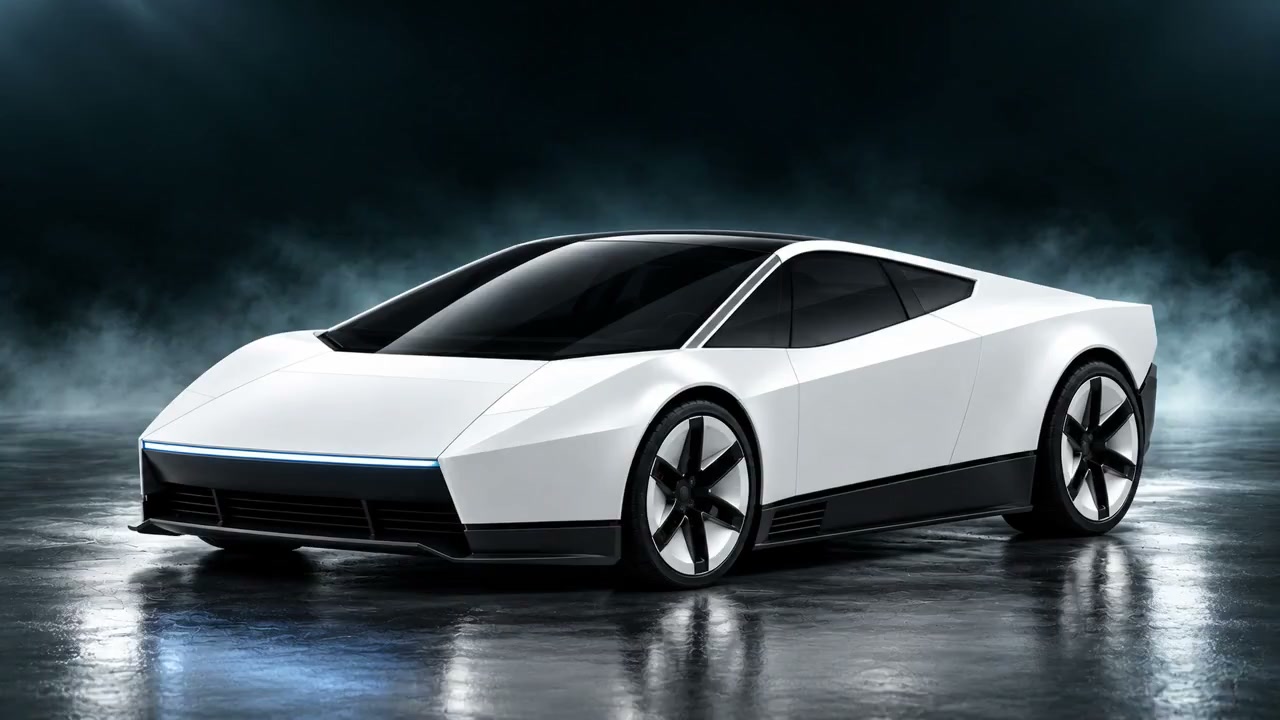
What happened at the reveal?
Euronews reported on October 16 that Tesla’s demonstration included a ramp-assisted aerial maneuver, a flip and a return to the ground. Its account distinguished the underside suction system from the thrusters used for aerial motion. Those are separate jobs: adding tire grip is not the same as producing upward lift. Read the event report.
Tesla’s official Roadster page presents different configurations and attaches conditions to optional features. Buyers should consult that page directly rather than assume every vehicle has the capabilities of a demonstration configuration. Check Tesla’s current product information.
Three different meanings of “flying car”
A vehicle can briefly become airborne, use thrust to change its trajectory, or maintain a controlled hover. These are different operating conditions. A jump begins with momentum; a sustained hover needs continuous support against gravity. A demonstration of one maneuver does not, by itself, establish an endurance figure for another.
That distinction matters when watching short clips. Ask how the vehicle leaves the ground, how it controls its orientation and how it lands. Then ask what has actually been measured: duration, energy consumption, repeatability and the operating environment. Spectacular footage is a starting point for those questions, not a replacement for the answers.
Why it is interesting for RC builders
A small model offers a way to explore the relationship between car styling and lift-system packaging. The challenge is not only making thrust. The wheels, ground drivetrain, battery, controls, protective structure and air path all share a limited space and mass budget.
Our design question is whether a complete sports-car silhouette can coexist with an electrically powered underbody lift system. We are studying a body envelope of 450 × 250 mm, with four 90 mm rotor disks and space reserved centrally for power and controls. These are proposed dimensions, not dimensions taken from Tesla’s production drawings.
What ROADSTER MODELS is working on
We are an independent RC concept project. Our current work concerns layout and a plan to compare one lift module with and without its installed duct. The first physical evidence should show the actual hardware, installed mass, voltage, current and net vertical force.
The concept films on this website illustrate intended appearance and movement. They do not show a completed flying prototype. Our proposed electric rotors also do not reproduce a full-size cold-gas system.
If the reveal brought you here, start with the dimensioned layout, then read the physical test plan. You can also register your interest and tell us which part of the project you want to follow.
Sources & scope
Sources reviewed on 22 October 2026. External reporting, documentation and manufacturer statements are attributed. RC calculations and design discussion are explanatory; they do not establish our vehicle’s flight performance.